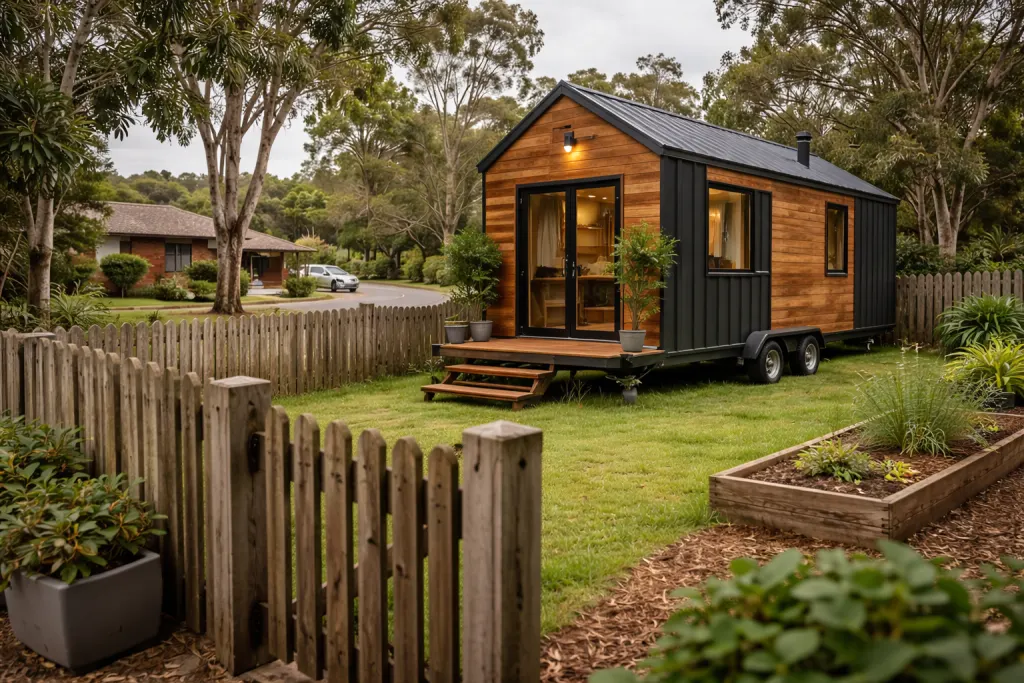
For years, one of the biggest barriers to tiny home living in Australia hasn’t been cost or design — it’s been navigating the planning system. But recent changes to the New South Wales planning framework have given the tiny home movement a genuine boost. For full background, see our comprehensive NSW tiny home regulations guide.
What Changed?
The NSW Department of Planning, Housing and Infrastructure has introduced amendments to the State Environmental Planning Policy (Exempt and Complying Development Codes) 2008 that directly affect small dwellings. The key changes include:
- Moveable dwellings under 37.5 square metres can now be approved as exempt development on certain land zones, provided they meet siting and safety requirements.
- Secondary dwellings (granny flats) up to 60 square metres continue to benefit from the complying development pathway, but the documentation requirements have been simplified.
- Clearer definitions distinguishing between caravans, moveable dwellings, and manufactured homes — reducing the grey area that has caused headaches for councils and owners alike.
- Streamlined certification — the number of documents required for a complying development certificate (CDC) for secondary dwellings under 40 square metres has been reduced. Previously, applicants needed to submit a full suite of planning reports even for straightforward builds. The amended framework allows certifiers to accept simplified documentation where the site is unconstrained (no flood, bushfire or heritage overlays).
- Explicit recognition of tiny homes on wheels (THOWs) as a subcategory of moveable dwelling, distinct from caravans and campervans. This is significant because it allows councils to apply purpose-built standards rather than defaulting to caravan park regulations.
These changes don’t mean you can park a tiny home anywhere without approval. But they do reduce red tape for properties in zones RU1 to RU4 (rural zones) and R1 to R3 (residential zones) across much of the state.
What This Means in Practice
The regulatory language can be abstract, so here is what these changes look like in real scenarios:
Scenario 1 — A retiree in the Central West. You own a rural property zoned RU1 and want to place a 30-square-metre tiny home on wheels as a secondary dwelling for your ageing parent. Under the old framework, many councils would have classified this as a caravan and limited occupancy to 60 days per year. Under the updated SEPP, your tiny home can qualify as exempt development provided it meets siting, safety and services requirements — no development application needed.
Scenario 2 — A young couple on the South Coast. You have purchased a residential block zoned R2 and want to build a 45-square-metre tiny home on a permanent foundation as your primary dwelling. The simplified CDC pathway means your private certifier can approve the build without a full DA process, provided the design complies with the National Construction Code and your lot meets the minimum size requirements in the local LEP.
Scenario 3 — A holiday tiny home in the Northern Rivers. You own a rural lifestyle block and want to place a self-contained tiny home for short-stay rental. The clearer definitions around moveable dwellings make it easier to determine which approval pathway applies, though you will still need to check whether your council has short-term rental accommodation provisions in its LEP.
Why This Matters
Previously, many councils treated tiny homes on wheels as caravans under the Local Government Act 1993, limiting how long you could live in one on private land. The updated framework acknowledges that a well-built tiny home is fundamentally different from a holiday caravan, and treats it accordingly.
This is particularly significant for regional NSW, where affordable housing pressure has been mounting in areas like the Northern Rivers, the Central West, and the South Coast. Local councils in these regions have been calling for clearer state-level guidance, and these amendments deliver that.
What You Still Need to Know
Even under the new framework, there are requirements you must meet:
Siting and Setbacks
Your tiny home must comply with setback distances from boundaries, bushfire asset protection zones (if applicable), and flood planning levels. These vary by council area, so check your local LEP (Local Environmental Plan) and DCP (Development Control Plan).
Building Standards
Tiny homes on foundations must meet the National Construction Code (NCC). Homes on wheels need to comply with relevant sections of the Local Government (Manufactured Home Estates, Caravan Parks, Camping Grounds and Moveable Dwellings) Regulation 2021.
Services and Connections
If your tiny home connects to mains water, sewer, or electricity, those connections still require approval and must be completed by licensed professionals. Off-grid setups have fewer connection requirements, but your water and waste systems must still meet health standards.
What About Other States?
NSW is arguably leading the way, but other states are moving too. Queensland’s framework for secondary dwellings has been relatively permissive for some time, and Victoria’s Small Second Dwelling provisions allow homes under 60 square metres on lots over 300 square metres. South Australia and Tasmania are both reviewing their planning instruments with small dwellings in mind.
We’ll be covering developments in each state as they unfold.
What Should You Do Now?
If you’ve been waiting for the regulatory landscape to improve before committing to a tiny home in NSW, now is a good time to revisit your plans. Here’s where to start:
- Check your zoning — use the NSW Planning Portal to confirm your land’s zoning and any overlays.
- Talk to your local council — a pre-lodgement meeting can save you time and money.
- Engage a certifier early — a private certifier familiar with small dwellings can guide you through the complying development pathway.
- Connect with a builder — our builder directory lists experienced tiny home builders across NSW who understand the new framework.
These reforms aren’t a free pass, but they are a meaningful step forward. The regulatory environment for tiny homes in Australia is slowly catching up with the demand — and that’s worth paying attention to.
Frequently Asked Questions
Does this affect existing tiny homes already on private land?
Yes, in a positive way. If you already have a tiny home on your property that was operating in a regulatory grey area — particularly a tiny home on wheels classified as a caravan — the updated definitions may allow you to formalise its status. You would still need to confirm that your home meets the siting and safety requirements under the amended SEPP, but the pathway to compliance is now clearer. Contact your local council to discuss your specific situation.
Which councils are affected by these changes?
The amendments apply state-wide because they are made at the SEPP level, which sits above individual council LEPs. However, the practical impact varies. Councils in areas with flood, bushfire or heritage overlays will still require additional assessments. Rural and regional councils — particularly in the Northern Rivers, Central West, Illawarra and South Coast — are likely to see the most benefit, as these areas have both the demand for affordable housing and the land availability to support small dwellings. Metropolitan councils in Sydney may see less change in practice due to lot size constraints and existing overlays.
Do I still need council approval, or can I just go ahead and build?
It depends on the pathway your tiny home qualifies for. If your build meets the criteria for exempt development, you do not need to lodge a development application — but you must still ensure compliance with all relevant standards, and it is wise to notify your council. If your build falls under the complying development pathway, you will need a complying development certificate issued by a council or accredited private certifier. Only builds that fall outside both categories require a full development application. Our NSW regulations guide explains each pathway in detail.