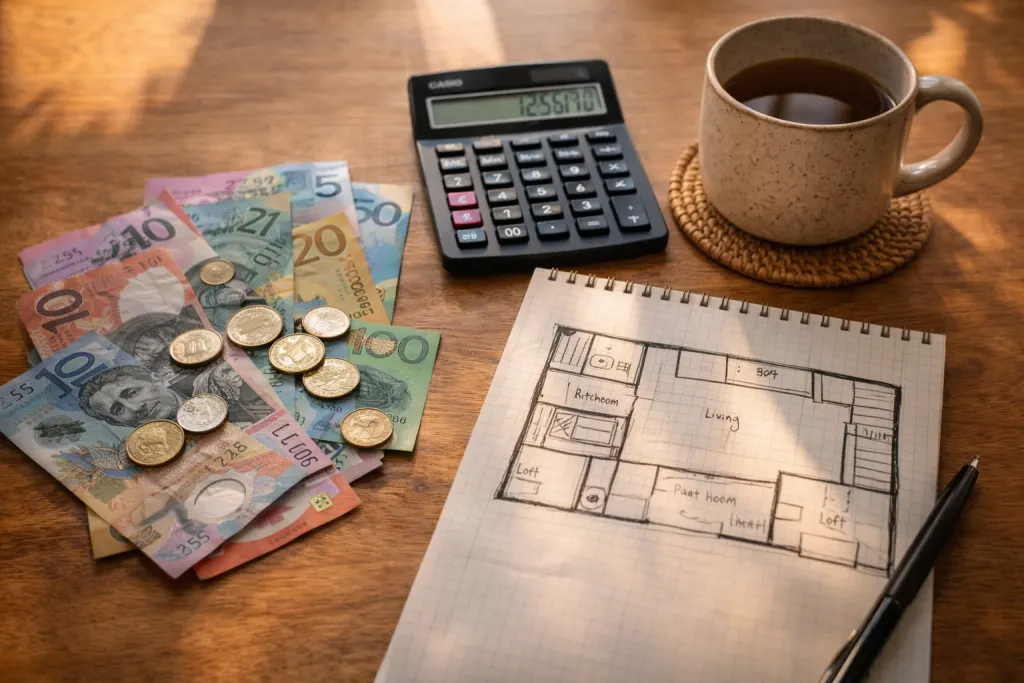
A quality tiny home in Australia costs between $60,000 and $180,000 for the dwelling itself. That’s a wide range because it depends on the type of tiny home you choose, whether you build it yourself or buy turnkey, where you put it, and how you connect to services. This guide breaks down every cost so you can plan with real numbers.
Cost by Type: At a Glance
| Type | Home Cost | Total Project Cost | Build Time |
|---|---|---|---|
| DIY THOW | $40,000–$90,000 | $55,000–$120,000 | 12–24 months |
| Flat-pack / kit | $45,000–$120,000 (kit) | $90,000–$180,000 | 10–14 weeks + your labour |
| Turnkey THOW | $80,000–$165,000 | $100,000–$200,000 | 8–16 weeks |
| Container conversion | $80,000–$180,000 | $100,000–$220,000 | 6–12 weeks |
| Modular / prefab | $90,000–$200,000+ | $120,000–$280,000 | 8–16 weeks |
| Granny flat | $100,000–$200,000+ | $130,000–$280,000+ | 12–20 weeks |
Total project cost includes the home plus site prep, approvals, services, and transport. Most people budget only for the home and get caught out by the rest.
As a rough guide, expect to pay $3,500–$5,500 per square metre for a professionally built tiny home, depending on fit-out level and type. A 20 sqm THOW at $4,000/sqm comes to $80,000; a 40 sqm granny flat at $4,500/sqm comes to $180,000.
What Real Builders Are Charging
These are verified prices from Australian builders as of early 2026:
| Builder | Location | Starting Price | Top Price | Type |
|---|---|---|---|---|
| Wombat Tiny Homes | NSW | $36,000 | $126,000 | THOW, Modular |
| Teeny Tiny Homes | QLD | $62,999 | $119,999 | THOW, Modular |
| Iconic Tiny Homes | VIC | $85,000 | $180,000 | THOW, Custom |
| LJM Tiny Homes | QLD | $101,900 | $163,900 | THOW, Custom |
| Treehab | VIC | $119,990 | $199,990 | THOW, Kit |
Prices are for the home only, before site costs. Browse our full builder directory to compare all listed builders.
DIY Builds: $40,000–$90,000
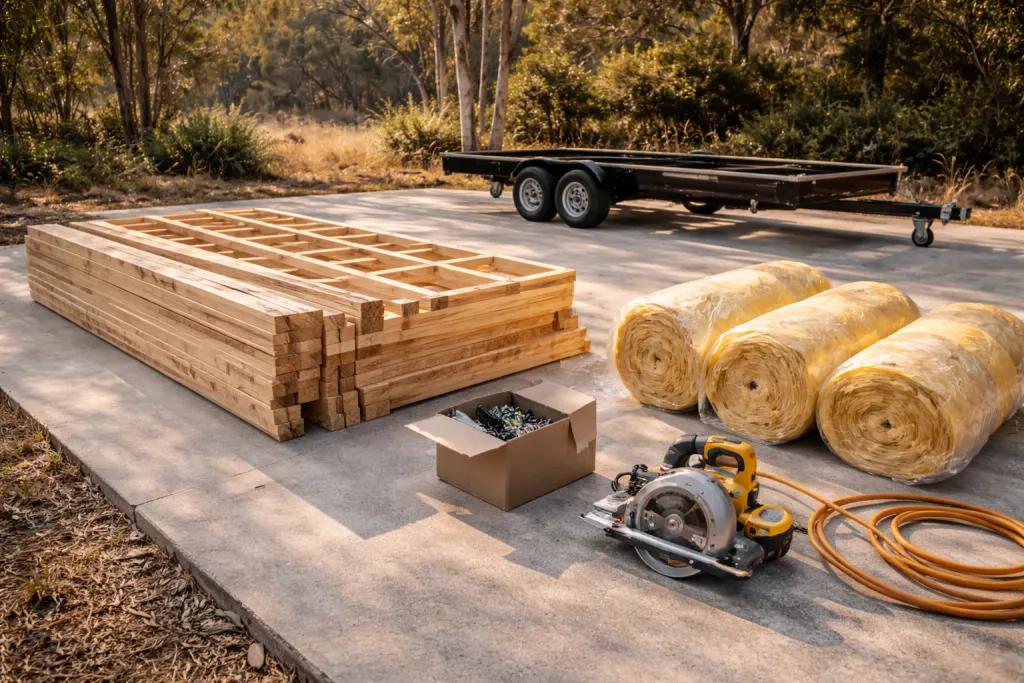
A DIY tiny home on wheels is the cheapest path, but it requires real building skills and 12–24 months of your time.
Typical cost breakdown for a DIY THOW:
| Item | Cost |
|---|---|
| Trailer (certified, dual-axle) | $8,000–$18,000 |
| Framing and structural timber | $4,000–$8,000 |
| Cladding and weatherproofing | $3,000–$7,000 |
| Roofing | $1,500–$3,500 |
| Windows and doors | $3,000–$8,000 |
| Electrical (licensed electrician required) | $3,000–$8,000 |
| Plumbing (licensed plumber required) | $2,000–$6,000 |
| Insulation | $1,500–$3,000 |
| Interior fit-out (kitchen, bathroom, joinery) | $8,000–$20,000 |
| Appliances | $2,000–$5,000 |
| Tools and consumables | $2,000–$5,000 |
| Total | $39,000–$91,500 |
Licensed tradespeople for electrical and plumbing are required by law in every Australian state. Budget $5,000–$14,000 for these alone. Also factor in the opportunity cost of your time. One DIY builder spent $45,000 on materials but noted the real cost included a year off work and significant family support.
Kit and Flat-Pack Homes: $45,000–$120,000
Kit homes give you pre-cut materials and plans. You or a builder assembles on site. The kit price is deceptive. Total project cost is typically double the kit price once you add site preparation, cladding, services, and finishes.
- Kit structure costs: typically $2,600–$3,000 per sqm
- Assembly: 10–14 weeks (longer for owner-builders)
- You still need all standard building approvals and NCC compliance
- Owner-builder permits required in most states above certain value thresholds
Bunnings recently entered this space, partnering with Elsewhere Pods to sell flat-pack studios from $26,100. These are studios and offices, not self-contained dwellings, but they signal where the market is heading.
Turnkey THOW: $80,000–$165,000
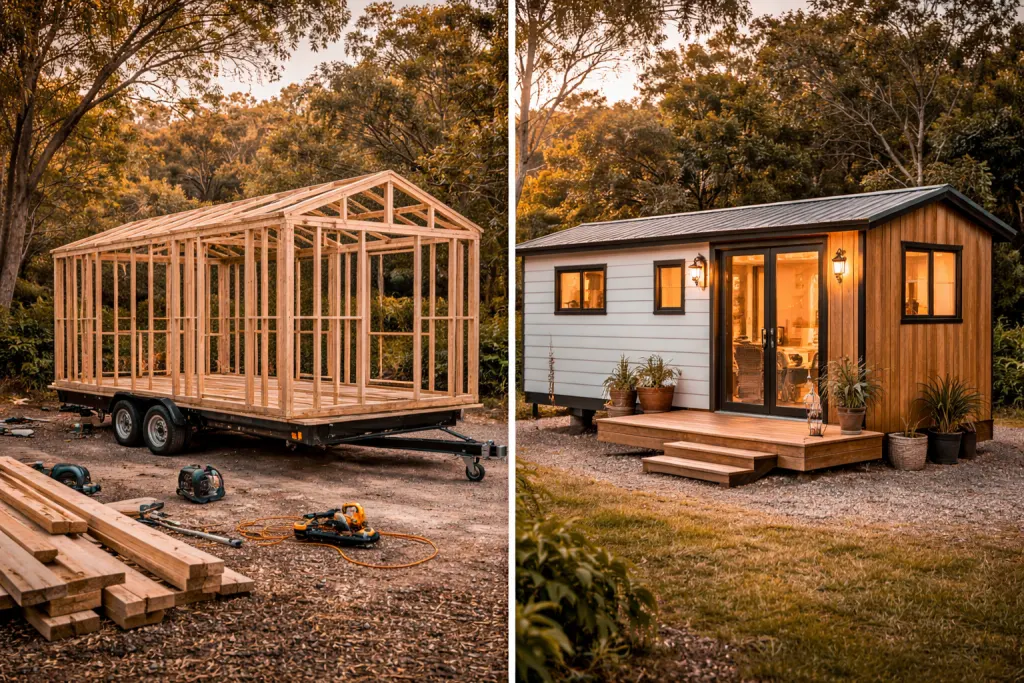
This is what most Australians buying a tiny home on wheels actually pay. A professional builder handles everything from design to handover.
What’s typically included:
- Trailer, framing, cladding, roofing
- Full kitchen with appliances
- Bathroom with hot water system
- Electrical system with switchboard
- Plumbing and gas (if applicable)
- Insulation and interior lining
- Joinery, storage, and fixtures
- Certifications (electrical, plumbing, structural)
What’s typically NOT included:
- Transport to your site ($1,000–$5,000+)
- Off-grid systems (solar, batteries, water tanks)
- Site preparation
- Council fees
Larger models (8.4m–12m) with premium finishes, off-grid capability, and two bedrooms push toward $180,000–$200,000+.
Container Conversions: $80,000–$180,000
Shipping container homes offer structural strength at a moderate price. A bare 6m container costs $3,500–$8,000, but the conversion adds up quickly.
| Item | 6m Container | 12m Container |
|---|---|---|
| Container | $3,500–$8,000 | $5,000–$12,000 |
| Insulation | $3,000–$6,000 | $5,000–$10,000 |
| Structural modifications (windows, doors) | $5,000–$12,000 | $8,000–$18,000 |
| Electrical and plumbing | $5,000–$14,000 | $8,000–$18,000 |
| Interior fit-out | $10,000–$25,000 | $15,000–$35,000 |
| Total conversion | $26,500–$65,000 | $41,000–$93,000 |
| Professional build (turnkey) | $80,000–$130,000 | $130,000–$180,000+ |
Insulation is the single most important line item. An uninsulated steel container reaches 60°C+ in Australian summer and is freezing in winter. Budget $3,000–$10,000 for proper insulation.
Granny Flats: $100,000–$200,000+
The most expensive tiny home type upfront, but the most established legal pathway and the only one that reliably adds value to your property.
| Item | Cost |
|---|---|
| Design and engineering | $3,000–$8,000 |
| Council/certifier fees (CDC or DA) | $2,000–$10,000 |
| Site works (footings, excavation) | $5,000–$20,000 |
| Building construction | $80,000–$150,000 |
| Services connection (water, sewer, electrical) | $5,000–$20,000 |
| Landscaping and pathways | $2,000–$8,000 |
| Total | $97,000–$216,000 |
A granny flat typically adds $100,000–$200,000 to your property value, depending on location and quality. Granny flats are also the easiest to finance through home equity loans. In QLD, the 2022 rental reform means you can rent to anyone, not just family.
The Costs Everyone Forgets
The dwelling price is only 70–80% of the total project cost. Budget for these:
| Hidden Cost | Range | Notes |
|---|---|---|
| Council application fees | $2,000–$10,000 | CDC is cheaper than DA |
| Site preparation | $3,000–$15,000 | Levelling, clearing, access |
| Utility connections | $5,000–$20,000 | Distance from mains is the key variable |
| Transport/delivery | $1,000–$5,000+ | Distance from builder to site |
| Off-grid systems | $8,000–$25,000 | Solar, batteries, water tanks, composting toilet |
| Insurance | $800–$2,000/year | THOW insured as caravan; fixed dwelling as building |
| Crane hire (modular/container) | $1,000–$3,000 | For placing prefab or container homes |
| Landscaping and access | $2,000–$10,000 | Driveway, paths, fencing |
| Furniture and fit-out | $2,000–$8,000 | Particularly for shell or kit builds |
Add 20–30% to the home price for your realistic total project cost.
Total Project Cost: Three Scenarios
Scenario 1: Budget rural ($120,000 total)
- $25,000 for a remote rural block (Brewarrina NSW, Coober Pedy SA)
- $80,000 for a turnkey THOW from a mid-range builder
- $15,000 for off-grid setup (solar, water tank, composting toilet)
- No council fees (Clause 77 exemption in NSW)
Scenario 2: Regional town ($220,000 total)
- $65,000 for a small lot in a regional town
- $130,000 for a turnkey THOW or small modular home
- $15,000 for site prep and service connections
- $10,000 for council fees and transport
Scenario 3: Suburban granny flat ($300,000 total)
- $0 for land (using existing property)
- $160,000 for a turnkey granny flat build
- $15,000 for services connection
- $5,000 for council CDC fees
- Note: adds roughly $150,000+ in property value
How Tiny Homes Compare to Traditional Housing
| Tiny Home (THOW) | Granny Flat | Regional House | Sydney House | |
|---|---|---|---|---|
| Purchase price | $80,000–$165,000 | $100,000–$200,000 | $500,000+ | $1,200,000+ |
| Weekly running costs | $50–$150 | $80–$180 | $300–$500 | $500–$800 |
| Monthly mortgage (25yr, 6%) | $500–$1,000 | $650–$1,300 | $3,200 | $7,700 |
| Time to save 20% deposit | 1–2 years | 1–3 years | 5–8 years | 10–15 years |
A tiny home won’t give you the same space, but it can give you mortgage-free living and financial freedom years earlier.
Financing Options
Traditional mortgages don’t apply to most tiny homes. Here are your options:
| Finance Type | Best For | Typical Rate | Notes |
|---|---|---|---|
| Personal loan | THOW, container | 5–9% | No asset security required |
| Chattel mortgage | THOW | 5–8% | Home used as security |
| Caravan/RV finance | THOW | 5–8% | Treated as a vehicle |
| Builder finance | Any | Varies | Some builders offer payment plans |
| Home equity loan | Granny flat | 4–6% | Uses existing property as security |
| Mortgage | Fixed modular | 4–6% | CBA started financing modular homes in Jan 2025 |
Tips for Staying on Budget
- Get at least three quotes. Prices vary significantly between builders. Use our builder directory to compare.
- Decide on-grid vs off-grid early. This is a $15,000–$25,000 decision. See our solar setup guide.
- Prioritise what you’ll use daily. A quality kitchen and bathroom matter every day. Heated floors and smart home tech can wait.
- Check your state regulations first. Know what approvals you need and budget for them before committing.
- Set aside a 15% contingency. Unexpected costs are normal, not exceptional.
- Consider the hybrid approach. Buy a shell from a builder and do the interior fit-out yourself to save 20–30%.
- Factor in land early. See our buying land guide for realistic land costs by region.
Frequently Asked Questions
What is the cheapest tiny home you can buy in Australia?
Wombat Tiny Homes in NSW start from $36,000 for their entry-level packages. For a fully self-contained, move-in-ready THOW, expect $60,000–$80,000 at the budget end. Bunnings now sells flat-pack studios from $26,100, but these are studios without kitchens or bathrooms.
Can I get a home loan for a tiny home?
Not a traditional mortgage for a THOW. Banks won’t lend against a moveable dwelling. Your options include personal loans (5–9%), chattel mortgages, or caravan finance. For a fixed secondary dwelling on land you own, some lenders will include it in a home equity loan. CBA became the first Big Four bank to finance modular homes in January 2025.
How much does it cost per square metre?
Roughly $3,500–$5,500 per sqm for a professionally built tiny home, depending on type and fit-out level. Kit homes run $2,600–$3,000 per sqm for the structure only (double it for the finished project). A 20 sqm THOW at $4,000/sqm comes to $80,000.
Is it cheaper to build a tiny home or a granny flat?
A THOW costs $80,000–$160,000 upfront. A granny flat costs $100,000–$200,000+. But granny flats add $100,000–$200,000 in property value, are easier to finance, and can be rented to anyone in QLD since 2022. THOWs are cheaper upfront but depreciate like vehicles. See our full comparison.
How much does it cost to live in a tiny home per week?
$50–$150 per week for a connected tiny home covering utilities, insurance, and maintenance. Off-grid setups can be cheaper after the initial solar and water investment. Most owners report total living costs 40–60% lower than a traditional home.
How much land do I need and what does it cost?
You don’t need to buy land. You can lease, land-share, or place a THOW on an existing property. If buying, rural blocks start from $15,000 in remote areas, $50,000–$100,000 in regional towns, and $150,000+ near cities. See our buying land guide.