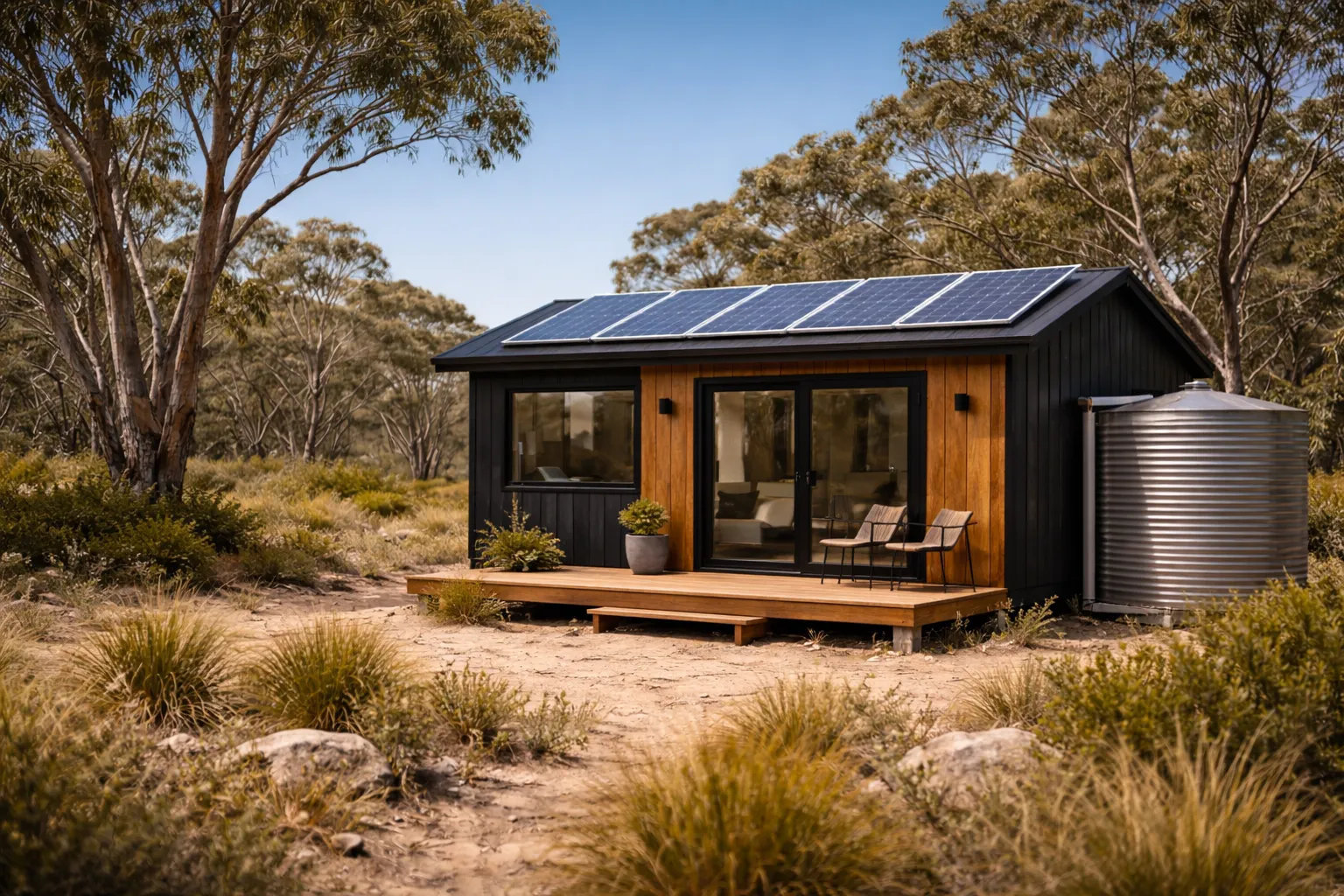
Energy Independence
Generate your own power with solar panels and battery storage. No electricity bills and no reliance on the grid.
Water Self-Sufficiency
Rainwater harvesting and filtration systems can supply all your household water needs in most Australian climates.
Reduced Cost of Living
Once your systems are set up, ongoing living costs drop dramatically. No utility bills means more financial freedom.
Environmental Alignment
Live in genuine harmony with the land. Off-grid tiny homes have one of the smallest environmental footprints of any dwelling type.
Location Freedom
Without the need for mains connections, you can live in places that would be impractical or prohibitively expensive to service.
Living on Your Own Terms
Off-grid living is about more than disconnecting from utility services — it is about building a life that is self-reliant, sustainable and deliberate. Tiny homes — particularly tiny homes on wheels and other compact types — are ideally suited to off-grid applications because their modest size makes it realistic to generate all the energy and water you need without industrial-scale systems.
In Australia, where sunshine is abundant and land outside major centres is comparatively affordable, off-grid tiny home living is a practical option for those prepared to plan carefully and invest in the right systems. If you are still looking for the right block, our buying land guide covers what to check before purchasing rural or remote land.
Energy Systems
Solar power is the backbone of most off-grid tiny homes in Australia. A typical setup includes:
- Solar panels: 3 to 6 kW of panels is usually sufficient for a tiny home’s energy needs, including lighting, refrigeration, cooking (if electric), hot water and device charging.
- Battery storage: Lithium iron phosphate (LiFePO4) batteries are the current standard, offering long cycle life and reliable performance. A 10 to 15 kWh battery bank covers most tiny home requirements with a comfortable margin.
- Inverter: A quality hybrid inverter converts DC power from your panels and batteries to AC power for household use.
- Backup generator: A small petrol or diesel generator provides peace of mind during extended cloudy periods, though many owners find they rarely need one.
System sizing depends on your location, energy habits and the time of year. A solar installer experienced with off-grid residential systems can design a setup tailored to your needs.
Water Supply
Rainwater harvesting is the most common water source for off-grid tiny homes. A well-designed system includes:
- Roof catchment and guttering directing water to storage tanks
- Storage tanks sized to your climate and usage — typically 10,000 to 20,000 litres for a single-person or couple household
- Filtration and UV treatment to ensure water is safe for drinking
- A pressure pump to deliver water to taps and fixtures
In drier parts of Australia, you may need to supplement rainwater with carted water during extended dry spells. Understanding your region’s rainfall patterns is essential when sizing your system.
A useful rule of thumb: in areas receiving at least 600 mm of annual rainfall — which covers most of coastal and eastern Australia — a well-designed roof catchment and 20,000-litre tank system can supply a conservative household of one or two people year-round. In drier inland regions, plan for larger storage capacity (30,000 litres or more) or budget for periodic water delivery during drought. Hot water is often the biggest single energy draw in a tiny home, so consider a solar hot water system or heat pump unit to reduce the load on your battery bank.
Waste Management
Off-grid waste management typically involves:
- Composting toilets: Modern composting toilets are odourless, low-maintenance and produce a useful soil amendment. They eliminate the need for a septic system or sewer connection.
- Greywater systems: Water from sinks, showers and laundry can be treated and reused for garden irrigation, subject to state and local health regulations.
Each state has its own requirements for on-site wastewater management. In most cases, you will need approval from your local council or health authority for your waste management system. Our regulation guides cover the key requirements by state.
Practical Considerations
Off-grid living requires a shift in mindset. You become actively responsible for your resource consumption — monitoring battery levels, managing water usage during dry periods, and maintaining your systems. This is part of the appeal for many people, but it is important to go in with realistic expectations.
Connectivity is another consideration. While mobile coverage reaches many regional areas, truly remote locations may require a satellite internet connection for reliable access. Services such as Starlink have made this far more viable than it was even a few years ago.
Is Off-Grid Right for You?
The best way to find out is to try it. Several tiny home short-stay properties across Australia offer genuine off-grid experiences. Spending a week living with solar power, rainwater and a composting toilet will tell you more than any amount of reading. If it resonates, start planning your systems and connecting with builders who specialise in off-grid tiny homes.
Frequently Asked Questions
How much does an off-grid setup cost?
The cost varies depending on the quality and capacity of your systems, but here are typical ranges for an Australian tiny home:
- Solar and battery system (3–6 kW panels, 10–15 kWh battery, inverter, wiring): $12,000 to $25,000 installed. Larger systems or premium batteries push towards the higher end.
- Rainwater harvesting (tanks, guttering, filtration, UV treatment, pump): $3,000 to $8,000 depending on tank size and filtration level.
- Composting toilet: $2,000 to $5,000 for a quality commercial unit. DIY options can be cheaper but may not meet all council requirements.
- Greywater system: $1,500 to $4,000 depending on treatment level and local regulations.
All up, expect to spend $20,000 to $40,000 on top of your tiny home build cost for a comprehensive off-grid setup. While that sounds significant, it effectively eliminates ongoing utility bills — most off-grid tiny home owners report total running costs under $1,000 per year once their systems are in place. For a detailed breakdown of the energy side, see our guide to solar setups for tiny homes.
Can I go partially off-grid?
Absolutely, and for many people this is the most practical approach. A partial off-grid setup means you generate some of your own resources while remaining connected to mains infrastructure for the rest. Common configurations include:
- Solar with grid backup — your solar panels and batteries handle most of your electricity needs, but you remain connected to the grid as a safety net for extended cloudy periods or high-usage days. Some states also allow you to feed excess solar energy back to the grid for a credit.
- Rainwater with mains top-up — you collect and use rainwater for most purposes but have a mains water connection or delivery arrangement for dry spells.
- Composting toilet with standard greywater to sewer — this reduces your water usage significantly without requiring a full on-site wastewater system.
Going partially off-grid is a good way to reduce your living costs and environmental footprint without the full commitment of total self-sufficiency. It also makes the planning and approval process simpler in many council areas, as you are not seeking exemptions from standard service connection requirements.
What happens during extended cloudy weather or drought?
This is the question every prospective off-grid owner should ask. For energy, a properly sized battery bank will carry you through two to three days of overcast weather without issue. Beyond that, a small backup generator (2–3 kW petrol or diesel) can top up your batteries in a few hours. Most off-grid owners report using their generator fewer than ten times per year. For water, the answer is forward planning: size your tanks generously, monitor your water levels regularly, and have a water delivery service identified for emergencies. In most of eastern Australia, genuine water shortages are rare with adequate tank capacity, but inland and northern regions require more conservative planning.
Browse builders with off-grid experience
Find Builders